AWS Certified Developer - Associate (DVA-C02) Course

The AWS Certified Developer – Associate (DVA-C02) course is designed for software developers and IT professionals who want to develop and maintain applications on the AWS cloud platform. This course provides in-depth knowledge of core AWS services, best practices for building secure and scalable cloud applications, and hands-on experience with AWS SDKs, APIs, and development tools.
thumb

AWS Certified Developer – Associate (DVA-C02) Training Course

This course provides comprehensive training for developing and deploying applications on AWS. Learn core AWS services, SDKs, and cloud architecture, along with practical exercises to build, monitor, and optimize cloud-based applications. AWS is a leading cloud platform used worldwide for application hosting, scalable infrastructure, and cloud solutions. This course prepares you for the AWS Certified Developer – Associate exam while providing real-world skills for designing, deploying, and maintaining AWS applications.

  • AWS core services: EC2, S3, Lambda, DynamoDB
  • Application deployment, monitoring, and troubleshooting
  • Serverless architecture and microservices
  • Security, IAM, and best practices for AWS development
  • Preparing for AWS Certified Developer – Associate Exam

Enroll today to start your journey into cloud development and become an AWS Certified Developer ready for in-demand roles in the tech industry!

What will I learn?

  • Proficiency in AWS services for application development
  • Ability to deploy, monitor, and optimize cloud applications
  • Hands-on experience with serverless architecture and microservices
  • Industry-ready skills to pursue AWS Developer roles

Requirements

  • Basic understanding of programming and cloud concepts
  • No prior AWS experience required
  • Willingness to complete hands-on exercises and cloud projects

AWS Certified Developer - Associate (DVA-C02) Course Content

Development with AWS Services
Develop code for applications hosted on AWS
  • Architectural patterns (for example, event-driven, microservices, monolithic, choreography, orchestration, fanout)
  • Idempotency
  • Differences between stateful and stateless concepts
  • Differences between tightly coupled and loosely coupled components
  • Fault-tolerant design patterns (for example, retries with exponential backoff and jitter, dead-letter queues)
  • Differences between synchronous and asynchronous patterns
Develop code for AWS Lambda
  • Event source mapping
  • Stateless applications
  • Unit testing
  • Event-driven architecture
  • Scalability
  • The access of private resources in VPCs from Lambda code
Use data stores in application development
  • Relational and non-relational databases
  • Create, read, update, and delete (CRUD) operations
  • High-cardinality partition keys for balanced partition access
  • Cloud storage options (for example, file, object, databases)
  • Database consistency models (for example, strongly consistent, eventually consistent)
  • Differences between query and scan operations
  • Amazon DynamoDB keys and indexing
  • Caching strategies (for example, write-through, read-through, lazy loading, TTL)
  • Amazon Simple Storage Service (Amazon S3) tiers and lifecycle management
  • Differences between ephemeral and persistent data storage patterns
Security
Implement authentication and/or authorization for applications and AWS services
  • Identity federation (for example, Security Assertion Markup Language [SAML], OpenID Connect [OIDC], Amazon Cognito)
  • Bearer tokens (for example, JSON Web Token [JWT], OAuth, AWS Security Token Service [AWS STS])
  • The comparison of user pools and identity pools in Amazon Cognito
  • Resource-based policies, service policies, and principal policies
  • Role-based access control (RBAC)
  • Application authorization that uses ACLs
  • The principle of least privilege
  • Differences between AWS managed policies and customermanaged policies • Identity and access management.
Implement encryption by using AWS services
  • Encryption at rest and in transit
  • Certificate management (for example, AWS Private Certificate Authority)
  • Key protection (for example, key rotation)
  • Differences between client-side encryption and server-side encryption
  • Differences between AWS managed and customer managed AWS Key Management Service (AWS KMS) keys.
Manage sensitive data in application code
  • Environment variables
  • Data classification (for example, personally identifiable information [PII], protected health information [PHI])
  • Secrets management (for example, AWS Secrets Manager, AWS Systems Manager Parameter Store)
  • Secure credential handling
Deployment
Prepare application artifacts to be deployed to AWS
  • Ways to access application configuration data (for example, AWS AppConfig, Secrets Manager, Parameter Store)
  • Lambda deployment packaging, layers, and configuration options
  • Git-based version control tools (for example, Git)
  • Container images
Test applications in development environments
  • Features in AWS services that perform application deployment
  • Ways to access application configuration data (for example, AWS AppConfig, Secrets Manager, Parameter Store)
  • Lambda deployment packaging, layers, and configuration options
  • Git-based version control tools (for example, Git)
  • Container images
  • Integration testing that uses mock endpoints
  • Lambda versions and aliases
Automate deployment testing
  • API Gateway stages
  • Branches and actions in the continuous integration and continuous delivery (CI/CD) workflow
  • Automated software testing (for example, unit testing, mock testing)
Deploy code by using AWS CI/CD services
  • Git-based version control tools (for example, Git)
  • Manual and automated approvals in AWS CodePipeline
  • Access application configurations from AWS AppConfig and Secrets Manager
  • CI/CD workflows that use AWS services
  • Lambda deployment packaging options
  • API Gateway stages and custom domains
  • Application deployment that uses AWS services and tools (for example, CloudFormation, AWS Cloud Development Kit [AWS CDK], AWS SAM, AWS CodeArtifact, AWS Copilot, Amplify, Lambda)
  • Deployment strategies (for example, canary, blue/green, rolling)
Assist in a root cause analysis
  • Logging and monitoring systems
  • Languages for log queries (for example, Amazon CloudWatch Logs Insights)
  • Data visualizations
  • Code analysis tools
  • Common HTTP error codes
  • Common exceptions generated by SDKs
  • Service maps in AWS X-Ray
Instrument code for observability
  • Distributed tracing
  • Differences between logging, monitoring, and observability
  • Structured logging
  • Application metrics (for example, custom, embedded, built-in)
Optimize applications by using AWS services and features
  • Caching
  • Concurrency
  • Messaging services (for example, Amazon Simple Queue Service [Amazon SQS], Amazon Simple Notification Service [Amazon SNS])

Start Your Enrollment

We are variations of passages the have suffered.

Why Choose Us ?

Our AWS Certified Developer – Associate (DVA-C02) course is designed by industry experts to provide hands-on experience with AWS cloud services, application development, and serverless architecture. With real-world projects, practical labs, and globally recognized certification, we ensure you gain the skills and confidence to excel as a Cloud Developer, DevOps Engineer, or AWS Solutions Architect. Flexible learning options, career guidance, and placement support make it easy to advance your cloud computing career with assurance.

Career Opportunities After AWS Certified Developer – Associate (DVA-C02) Course

The AWS Certified Developer – Associate (DVA-C02) Course equips learners with the skills to develop, deploy, and maintain applications on Amazon Web Services (AWS). After completing this course, learners can pursue roles such as AWS Developer, Cloud Engineer, DevOps Engineer, Cloud Solutions Architect, or Software Developer. The course provides practical knowledge of AWS services, application deployment, monitoring, and optimization — preparing you for high-demand cloud computing roles in IT and software companies.

AWS Certified Developer – Associate (DVA-C02) Certification

Get Certified and Advance Your Career in Cloud Development

  • Complete all modules covering AWS core services, application development, and cloud deployment.
  • Build and submit hands-on cloud projects using AWS services like Lambda, S3, and DynamoDB.
  • Pass the AWS Certified Developer – Associate (DVA-C02) Exam to earn your official AWS credential.

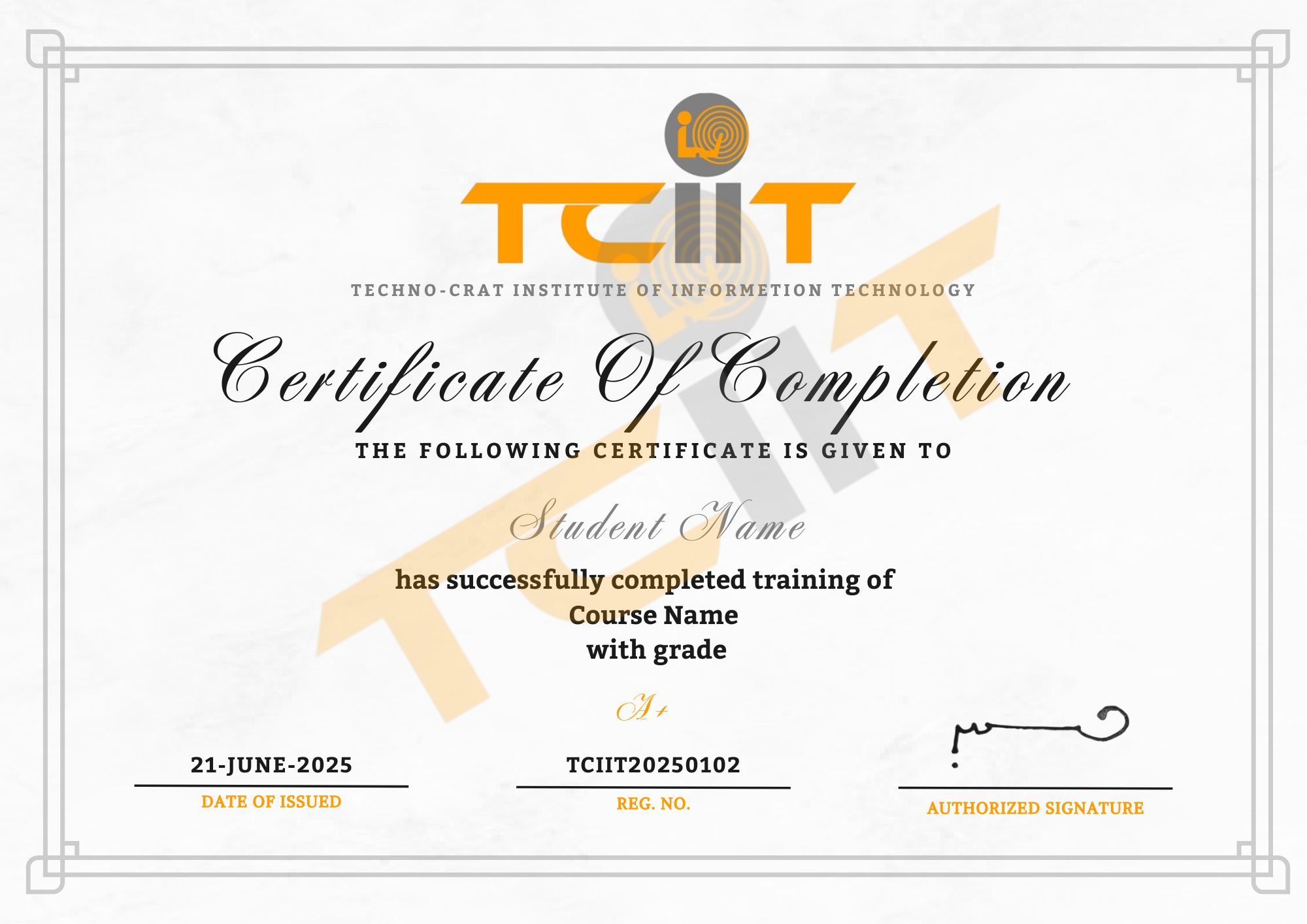
Upon successful completion of the AWS Certified Developer – Associate Course, learners will receive a globally recognized AWS certification through our Learning Management System (LMS). This certification validates your expertise in developing, deploying, and debugging cloud-based applications on AWS, giving you a competitive edge in the fast-growing cloud industry.

thumb
whatsapp