PHP Developer Course

The PHP Developer Course is designed to teach students how to build dynamic and interactive web applications using PHP, one of the most widely used server-side scripting languages. The course starts with PHP fundamentals and progresses to working with databases (MySQL), form handling, sessions, and the basics of building web applications.
thumb

PHP Developer Certification Course

Become a skilled PHP developer and learn how to build dynamic, data-driven, and fully functional web applications. This course teaches you the fundamentals of PHP programming, working with databases, form handling, validation, user authentication, and building dynamic web pages. You will also learn how servers process data and how PHP connects with MySQL to power real-world websites. By the end of the course, you’ll be able to create secure and professional web applications from scratch.

  • PHP Basics: Syntax, variables, data types, operators
  • Control Structures: Loops, conditions, logical operations
  • Functions: Reusable blocks, parameters, return values
  • Forms & Processing: GET/POST handling, validation
  • MySQL Database: Tables, CRUD operations, data storage
  • Authentication: Login, sessions, logout, password encryption
  • File Handling: Uploads, downloads, server storage
  • Mini Projects: User management system, admin panel, CMS basics

This hands-on course prepares learners for real development environments using PHP and MySQL. You will work on multiple projects, including dashboards, login systems, CMS modules, and CRUD applications that demonstrate practical industry skills. Students also learn coding standards, security practices, error handling, and project structuring. By completing the course, you will have a strong portfolio and the confidence to work on production-level web applications, freelance projects, or collaborate with development teams.

What will I learn?

  • Build dynamic and interactive websites using PHP
  • Connect and manage MySQL databases
  • Create login systems and user authentication modules
  • Process forms securely and handle backend logic
  • Develop real-world projects that can be added to your portfolio

Requirements

  • Basic computer knowledge
  • Basic understanding of HTML recommended
  • Interest in backend and server-side development

PHP Course Content

Module 1: Introduction to PHP
  • What is PHP?
  • What is a PHP File?
  • What Can PHP Do?
  • Why PHP?
  • What's New in PHP 7 - 8
  • PHP Installation
  • What Do I Need?
  • Using a Web Host with PHP Support
  • Setting Up PHP on Your PC
Module 2: PHP Basic Concepts
  • PHP Syntax & Basics
  • Syntax & Comments
  • PHP Variables
  • PHP echo and print Statements
Module 3: PHP Data Types
  • PHP Data Types Overview
  • String
  • Integer
  • Float
  • Boolean
  • Array
Module 4: Working with Strings
  • PHP Strings
  • Modify Strings
  • Concatenate Strings
  • Slicing Strings
  • Escape Characters
Module 5: Working with Numbers
  • PHP Numbers Overview
  • PHP Integers
  • PHP Floats
  • PHP Casting
  • Cast to String
  • Cast to Integer
  • Cast to Float
  • Cast to Boolean
  • Cast to Array
  • Cast to Object
  • Cast to NULL
Math Functions
  • pi()
  • min() & max()
  • abs()
  • sqrt()
  • round()
  • Random Numbers
Module 6: Constants
  • PHP Constants
  • const Keyword
  • Constant Arrays
  • Constants are Global
  • PHP Magic Constants
Module 7: PHP Operators
  • Arithmetic Operators
  • Assignment Operators
  • Comparison Operators
  • Increment/Decrement Operators
  • Logical Operators
  • String Operators
  • Array Operators
  • Conditional Assignment Operators
Module 8: Control Statements
  • if Operators
  • if…else Statements
  • elseif
  • Nested if
  • Switch
Module 9: PHP Loops
  • while Loop
  • do…while Loop
  • for Loop
  • foreach Loop
  • Break Statement
  • Continue Statement
Module 10: PHP Functions
  • Built-in Functions
  • Calling a Function
  • Function Arguments
  • Default Argument Value
  • Returning Values
  • Passing Arguments by Reference
  • Variable Number of Arguments
  • PHP as Loosely Typed Language
  • Return Type Declarations
Module 11: PHP Arrays
  • Indexed Arrays
  • Associative Arrays
  • Creating Arrays
  • Accessing Arrays
  • Updating Array Items
  • Adding Elements
  • Removing Elements
  • Sorting Arrays
  • Multidimensional Arrays
  • Array Functions
Module 12: Superglobals
  • $GLOBALS
  • $_SERVER
  • $_REQUEST
  • $_POST
  • $_GET
Module 13: Regular Expressions
  • Using preg_match(). preg_match_all() & preg_replace()
Module 14: Working with Forms
  • Form Handling with PHP
  • Form Validation
  • Required Fields
  • Validate Email & URL
  • Complete PHP Form Example

Advanced PHP

Advanced Arrays
  • Recursive Arrays
  • Array Filtering
  • Array Mapping
  • Higher-Order Functions
  • Array of Objects
  • Reference vs Value
Advanced Strings
  • Regular Expressions in PHP
  • Multiline Strings (heredoc / nowdoc)
  • Encoding & Unicode Handling
Filtering & Sanitization
  • filter_var(), filter_input()
  • Advanced Filter Flags
  • Security Handling
  • XSS Prevention
  • Injection Prevention
Error Handling
  • set_error_handler
  • trigger_error
  • Exception Handling (try/catch)
  • Custom Exception Classes
  • Logging and Production-Safe Error Display
Object-Oriented PHP
  • What is OOP?
  • Classes & Objects
  • Properties & Methods
  • Inheritance
  • Interfaces
  • Abstract Classes
  • $this Keyword
  • instanceof
  • Magic Methods : (__construct, __destruct, __get, __set, etc.)
  • Namespaces & Traits
Dates & Times
  • DateTime Class
  • Formatting Dates
  • Timezones
  • Timestamps
  • Date/Time Functions for Business Logic
Sessions & Cookies
  • Starting Sessions
  • Using $_SESSION
  • Setting & Reading Cookies
  • Expiry, Path & Domain
  • Session Security (hijacking, fixation)
Files & Directories
  • Directory Scanning, Creation & Deletion
  • Path Handling & Permissions
  • File Metadata (size, modification time)
  • Handling Large File Uploads
PHP + AJAX
  • Sending AJAX Requests (fetch/XHR)
  • Writing PHP Backend for JSON/XML Responses
  • Updating UI Without Page Reload

PHP + MySQL (Database Integration)

Introduction
  • What is MySQL?
  • Why Use MySQL with PHP?
  • Tables, Rows, Columns Basics
  • Development Setup
Connecting to Database
  • MySQLi (Procedural & OOP)
  • PDO (PHP Data Objects)
  • MySQLi vs PDO ( Pros & Cons )
Creating Database & Tables
  • CREATE DATABASE
  • CREATE TABLE
  • Primary Keys, AUTO_INCREMENT, NOT NULL, DEFAULT
Insert Data
  • INSERT INTO
  • Prepared Statements
  • Auto-Increment Handling
Select Data
  • SELECT Statement Basics
  • Fetching Results
  • Associative Arrays & Objects
  • Displaying Results in HTML
Update Data
  • UPDATE ... SET ... WHERE ...
  • Using Prepared Statements
Delete Data
  • DELETE FROM ... WHERE ...
  • Hard Delete vs Soft Delete
Prepared Statements & Security
  • Preventing SQL Injection
  • Parameter Binding
  • Input Validation & Output Escaping
Transactions
  • BEGIN, COMMIT, ROLLBACK
  • Error Handling
  • Atomic Database Operations
Integrating Forms with MySQL
  • Collecting Form Input
  • Validating & Sanitizing
  • Insert / Update Operations
  • Displaying Data from Database
Advanced Database Concepts
  • JOIN (INNER, LEFT, RIGHT)
  • Indexes & Performance
  • Stored Procedures / Triggers
  • Bulk Operations & Batch Inserts
AJAX + MySQL
  • AJAX Without Page Reload
  • PHP Endpoint for AJAX
  • JSON Responses
  • Error Handling

Start Your Enrollment

We are variations of passages the have suffered.

Why Choose Us ?

Get step-by-step guidance, real coding experience, and personal mentorship to master PHP from basics to advanced industry concepts.

Career Opportunities After PHP Developer Course

The PHP Developer Course opens up a wide range of opportunities in the web development industry. PHP remains one of the most in-demand backend technologies used by startups, agencies, and enterprises. After completing this course, learners can work as PHP Developers, Backend Developers, Web Application Developers, CMS Developers (WordPress, Joomla), or Full Stack Developers. The course builds strong practical knowledge in server-side scripting, database integration, and dynamic web application development — helping you secure positions in both freelance and corporate environments.

PHP Developer Course Certification

Get Certified and Become a Professional PHP Developer

  • Complete all modules including PHP syntax, MySQL integration, and CRUD operations.
  • Build and submit your final dynamic web project.
  • Receive your PHP Developer Certificate and showcase your backend development skills.

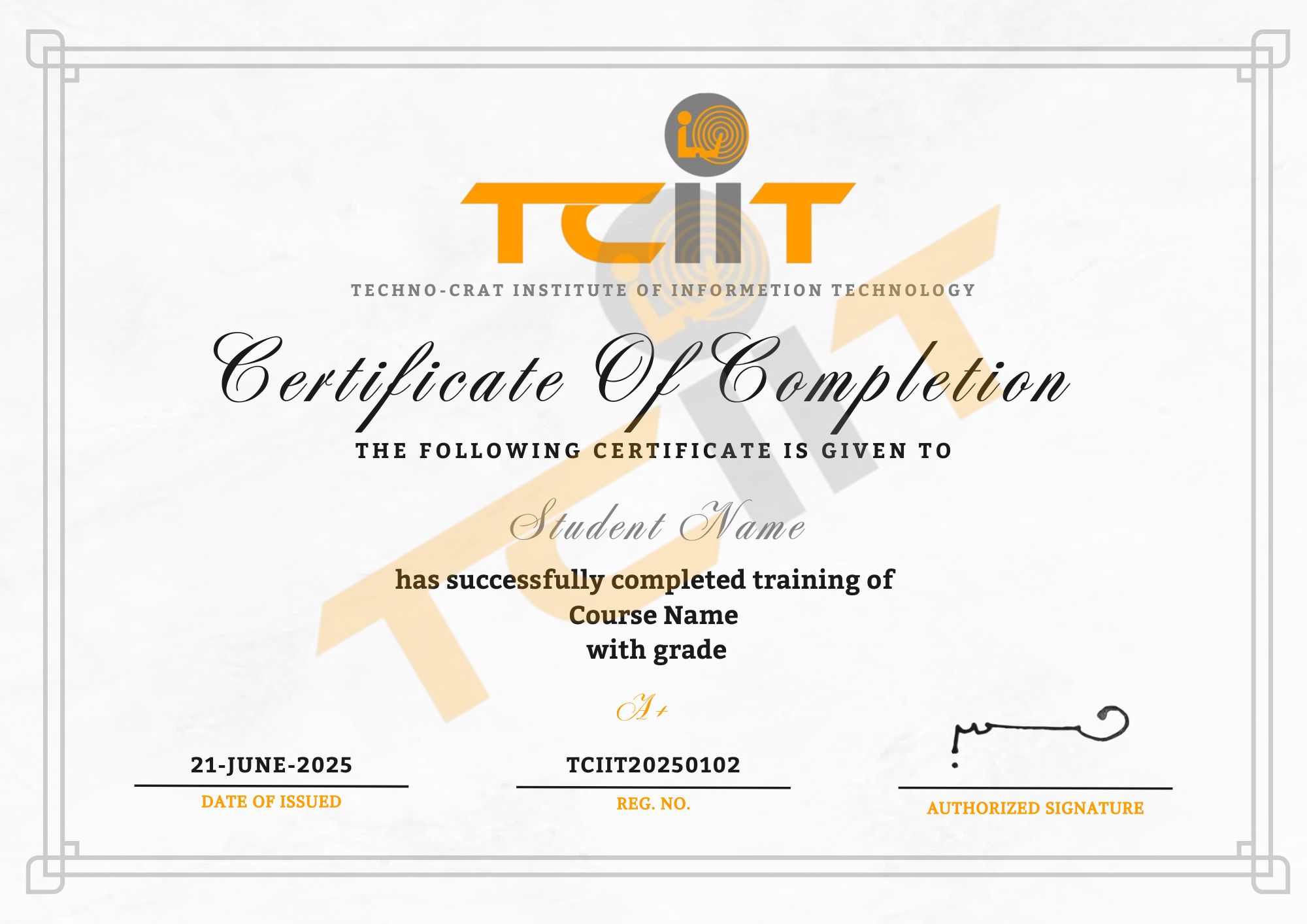
Upon successful completion of the PHP Developer Course, you’ll receive a professional certificate through our Learning Management System (LMS). This certification validates your expertise in PHP programming, database management, and web application development — making you career-ready for backend and full stack development roles.

thumb
whatsapp