C programming Course
Learn the fundamentals of C programming in this introductory course. Covering variables, control structures, functions, and memory management, you'll gain practical skills through hands-on exercises and projects. Ideal for beginners looking to kickstart their journey into software development and system programming.
C Programming Certification Training Course
Our comprehensive C Language Course covers all essential topics, including variables, data types, control structures, functions, arrays, pointers, and more. Join our C programming training to master fundamental programming concepts and enhance your software development skills. Gain hands-on experience with C programming exercises, projects, and practical examples. Our C programming classes are designed for beginners and experienced programmers alike, offering a structured curriculum to build a strong foundation in computer programming. Enroll now to unlock the power of C programming and boost your career in software development!. C programming is a powerful, high-level procedural programming language that was developed in the early 1970s by Dennis Ritchie at Bell Labs. Renowned for its efficiency, C has become a foundational language in computer science, forming the basis for many modern languages such as C++, Java, and Python. Its design provides constructs that map efficiently to typical machine instructions, making it an ideal choice for system programming, including operating systems and embedded systems. C's syntax is relatively simple and provides low-level access to memory through pointers, which allows developers to write highly optimized code. This course is designed to introduce you to the fundamentals of C programming, helping you develop problem-solving skills and an understanding of how software interacts with hardware. By mastering C, you'll gain a strong foundation in coding, essential for pursuing advanced programming languages and technologies. This course equips you with the skills to write efficient, optimized, and well-structured code in C. Through a combination of theoretical concepts and hands-on practice, you'll develop:
- A strong grasp of programming fundamentals.
- Confidence in tackling coding challenges and real-world projects.
- A solid foundation for advancing into specialized domains in IT and software development.
Enroll Today to start your journey into coding and unlock the power of C programming for a successful career in technology!
What will I learn?
- Proficient in C programming language.
- Industry-ready with practical skills.
- Strong foundation in software development principles.
- Enhanced problem-solving abilities.
Requirements
- Basic understanding of computer operation.
- No prior programming experience required.
- Willingness to engage in practical exercises and projects.
Start Your Enrollment
We are variations of passages the have suffered.
Why Choose Us ?
These features contribute to a comprehensive and engaging learning experience in a C programming course, helping students develop strong foundational skills and prepare for future opportunities in programming and software development.
Diverse Career Opportunities in C Programming: Exploring Paths in India's Technology Sector
In India, proficiency in C programming can open up various career opportunities in the technology sector. C programming offers Different opportunities in reputed organizations worldwide such as Facebook, Google, and more. These companies recognize the value of skilled C programmers and compensate them handsomely for their contributions. While salary structures vary across organizations and experience levels, the average annual salary for a C programmer in India stands at 470,000 INR, while in the USA, it reaches $74,077.
Get C Programming Certification
Three easy steps will unlock your C Programming Certification
- Finish the online / offline course of C++ Programming Course and the Assignment.
- Take on and successfully complete a number of industry-based Projects
- Pass the C++ Programming certification exam
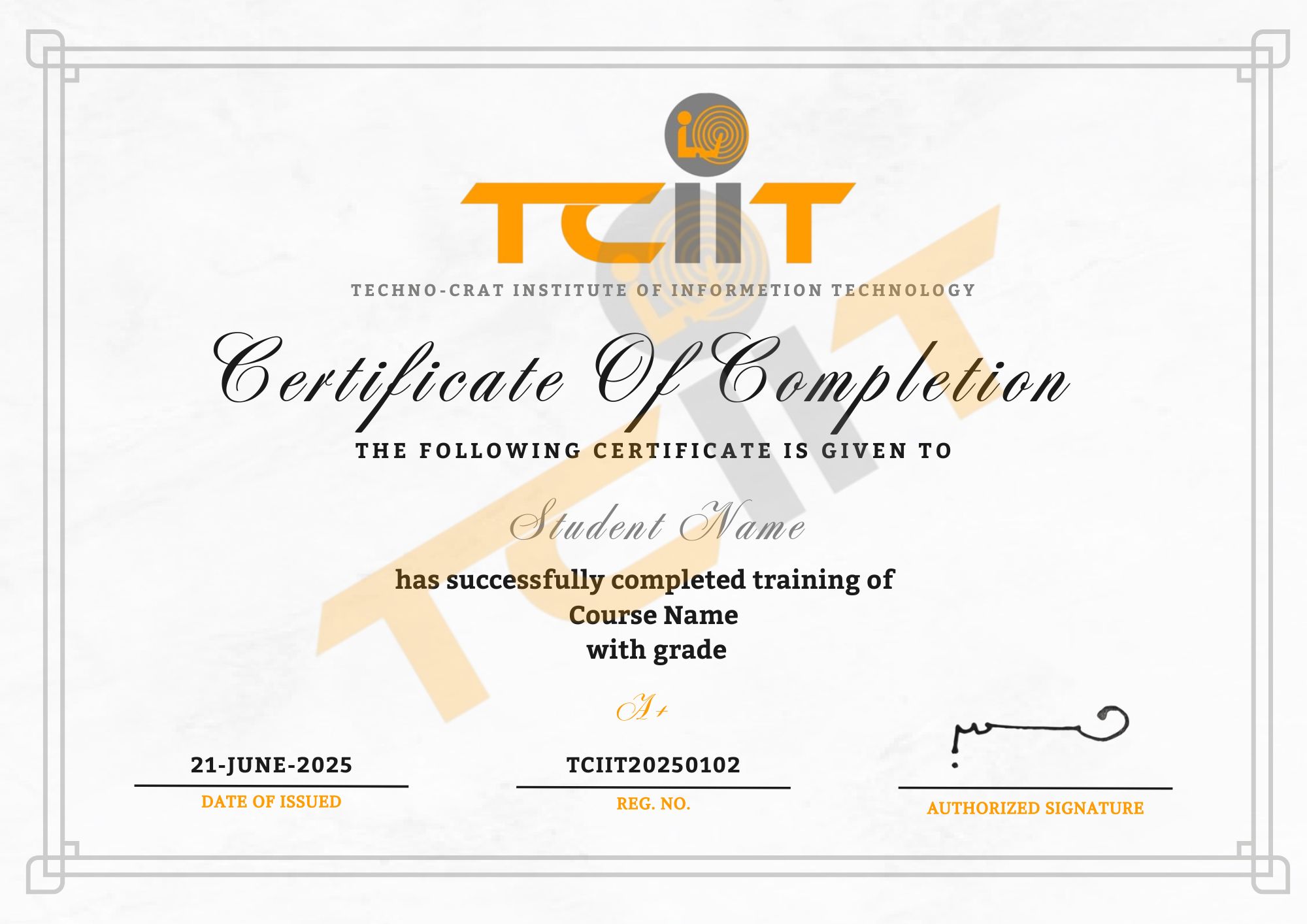
The certificate for this C Programming course will be sent to you through our learning management system, where you can also download it. Add a link to your certificate to your CV or LinkedIn profile.