AWS Certified Solutions Architect - Associate (SAA-C03) Course

The AWS Certified Solutions Architect – Associate (SAA-C03) course equips learners with the skills to design, deploy, and manage scalable, secure, and highly available applications on the AWS cloud. Participants gain hands-on experience with core AWS services, including compute, storage, databases, networking, and security, while learning best practices for cost optimization, disaster recovery, and performance monitoring. This course is ideal for aspiring cloud architects, IT professionals, and developers seeking to build practical AWS expertise and earn the SAA-C03 certification to advance their cloud careers.
thumb

AWS Certified Solutions Architect – Associate (SAA-C03) Training Course

This course provides comprehensive training in designing and deploying AWS cloud solutions. Learn to architect secure, scalable, and highly available applications using AWS services like EC2, S3, RDS, VPC, and Lambda. Hands-on labs and projects give you practical experience in cloud architecture and solution deployment. AWS is the leading cloud platform worldwide, and this course prepares you for the SAA-C03 certification exam while equipping you with real-world skills to design efficient and optimized cloud solutions for businesses.

  • AWS core services: EC2, S3, RDS, VPC, Lambda
  • Designing scalable, highly available, and fault-tolerant systems
  • Security best practices and IAM
  • Cost optimization and deployment strategies
  • Preparing for AWS Solutions Architect – Associate Exam

Enroll today to gain expertise in AWS cloud architecture and advance your career as a certified Solutions Architect!

What will I learn?

  • Design and deploy secure, scalable, and cost-efficient AWS solutions
  • Hands-on skills with AWS services for real-world cloud applications
  • Understanding of best practices in architecture, deployment, and security
  • Readiness for AWS certification and cloud-focused roles

Requirements

  • Basic understanding of cloud computing and IT infrastructure
  • Prior knowledge of AWS fundamentals is helpful but not mandatory
  • Willingness to complete hands-on labs and cloud projects

AWS Certified Solutions Architect - Associate (SAA-C03) Course Content

Design Secure Architectures
Design secure access to AWS resources
  • Access controls and management across multiple accounts
  • AWS federated access and identity services (for example, AWS Identity and Access Management [IAM], AWS IAM Identity Center [AWS Single Sign-On])
  • AWS global infrastructure (for example, Availability Zones, AWS Regions)
  • AWS security best practices (for example, the principle of least privilege)
  • The AWS shared responsibility model
Design secure workloads and applications
  • Application configuration and credentials security
  • AWS service endpoints
  • Control ports, protocols, and network traffic on AWS
  • Secure application access
  • Security services with appropriate use cases (for example, Amazon Cognito, Amazon GuardDuty, Amazon Macie)
  • Threat vectors external to AWS (for example, DDoS, SQL injection)
Determine appropriate data security controls
  • Data access and governance
  • Data recovery
  • Data retention and classification
  • Encryption and appropriate key management
Design Resilient Architectures
Design scalable and loosely coupled architectures
  • API creation and management (for example, Amazon API Gateway, REST API)
  • Caching strategies
  • Design principles for microservices (for example, stateless workloads compared with stateful workloads)
  • Event-driven architectures
  • Horizontal scaling and vertical scaling
  • How to appropriately use edge accelerators (for example, content delivery network [CDN])
  • How to migrate applications into containers
  • Load balancing concepts (for example, Application Load Balancer)
  • Multi-tier architectures
  • Queuing and messaging concepts (for example, publish/subscribe)
  • Serverless technologies and patterns (for example, AWS Fargate, AWS Lambda)
  • When to use read replicas
  • Workflow orchestration (for example, AWS Step Functions)
  • Storage types with associated characteristics (for example, object, file, block)
  • The orchestration of containers (for example, Amazon Elastic Container Service [Amazon ECS], Amazon Elastic Kubernetes Service [Amazon EKS])
Design highly available and/or fault-tolerant architectures
  • AWS global infrastructure (for example, Availability Zones, AWS Regions, Amazon Route 53)
  • AWS managed services with appropriate use cases (for example, Amazon Comprehend, Amazon Polly)
  • Basic networking concepts (for example, route tables)
  • Disaster recovery (DR) strategies (for example, backup and restore, pilot light, warm standby, active-active failover, recovery point objective [RPO], recovery time objective [RTO])
  • Distributed design patterns
  • Failover strategies
  • Immutable infrastructure
  • Load balancing concepts (for example, Application Load Balancer)
  • Proxy concepts (for example, Amazon RDS Proxy)
  • Service quotas and throttling (for example, how to configure the service quotas for a workload in a standby environment)
  • Storage options and characteristics (for example, durability, replication)
  • Workload visibility (for example, AWS X-Ray)
Design High-Performing Architectures
Determine high-performing and/or scalable storage solutions
  • Hybrid storage solutions to meet business requirements
  • Storage services with appropriate use cases (for example, Amazon S3, Amazon Elastic File System [Amazon EFS], Amazon Elastic Block Store [Amazon EBS])
  • Storage types with associated characteristics (for example, object, file, block)
Design high-performing and elastic compute solutions
  • AWS compute services with appropriate use cases (for example, AWS Batch, Amazon EMR, Fargate)
  • Distributed computing concepts supported by AWS global infrastructure and edge services
  • Queuing and messaging concepts (for example, publish/subscribe)
  • Scalability capabilities with appropriate use cases (for example, Amazon EC2 Auto Scaling, AWS Auto Scaling)
  • Serverless technologies and patterns (for example, Lambda, Fargate)
  • The orchestration of containers (for example, Amazon ECS, Amazon EKS)
Determine high-performing database solutions
  • AWS global infrastructure (for example, Availability Zones, AWS Regions)
  • Caching strategies and services (for example, Amazon ElastiCache)
  • Data access patterns (for example, read-intensive compared with write intensive)
  • Database capacity planning (for example, capacity units, instance types, Provisioned IOPS)
  • Database connections and proxies
  • Database engines with appropriate use cases (for example, heterogeneous migrations, homogeneous migrations)
  • Database replication (for example, read replicas)
  • Database types and services (for example, serverless, relational compared with non-relational, in-memory)
Determine high-performing and/or scalable network architectures
  • Edge networking services with appropriate use cases (for example, Amazon CloudFront, AWS Global Accelerator)
  • How to design network architecture (for example, subnet tiers, routing, IP addressing)
  • Network connection options (for example, AWS VPN, Direct Connect, AWS PrivateLink)
  • Load balancing concepts (for example, Application Load Balancer)
Determine high-performing data ingestion and transformation solutions
  • Data analytics and visualization services with appropriate use cases (for example, Amazon Athena, AWS Lake Formation, Amazon QuickSight)
  • Data ingestion patterns (for example, frequency)
  • Data transfer services with appropriate use cases (for example, AWS DataSync, AWS Storage Gateway)
  • Data transformation services with appropriate use cases (for example, AWS Glue)
  • Secure access to ingestion access points
  • Sizes and speeds needed to meet business requirements
  • Streaming data services with appropriate use cases (for example, Amazon Kinesis)
Design Cost-Optimized Architectures
Design cost-optimized storage solutions
  • Access options (for example, an S3 bucket with Requester Pays object storage)
  • AWS cost management service features (for example, cost allocation tags, multi-account billing)
  • AWS cost management tools with appropriate use cases (for example, AWS Cost Explorer, AWS Budgets, AWS Cost and Usage Report)
  • AWS storage services with appropriate use cases (for example, Amazon FSx, Amazon EFS, Amazon S3, Amazon EBS)
  • Backup strategies
  • Block storage options (for example, hard disk drive [HDD] volume types, solid state drive [SSD] volume types)
  • Data lifecycles
  • Hybrid storage options (for example, DataSync, Transfer Family, Storage Gateway)
  • Storage access patterns
  • Storage tiering (for example, cold tiering for object storage)
  • Storage types with associated characteristics (for example, object, file, block)
Design cost-optimized compute solutions
  • AWS cost management service features (for example, cost allocation tags, multi-account billing)
  • AWS cost management tools with appropriate use cases (for example, Cost Explorer, AWS Budgets, AWS Cost and Usage Report)
  • AWS global infrastructure (for example, Availability Zones, AWS Regions)
  • AWS purchasing options (for example, Spot Instances, Reserved Instances, Savings Plans)
  • Distributed compute strategies (for example, edge processing)
  • Hybrid compute options (for example, AWS Outposts, AWS Snowball Edge)
  • Instance types, families, and sizes (for example, memory optimized, compute optimized, virtualization)
  • Optimization of compute utilization (for example, containers, serverless computing, microservices)
  • Scaling strategies (for example, auto scaling, hibernation)
Design cost-optimized database solutions
  • AWS cost management service features (for example, cost allocation tags, multi-account billing)
  • AWS cost management tools with appropriate use cases (for example, Cost Explorer, AWS Budgets, AWS Cost and Usage Report)
  • Caching strategies
  • Data retention policies
  • Database capacity planning (for example, capacity units)
  • Database connections and proxies
  • Database engines with appropriate use cases (for example, heterogeneous migrations, homogeneous migrations)
  • Database replication (for example, read replicas)
  • Database types and services (for example, relational compared with nonrelational, Aurora, DynamoDB)
Design cost-optimized network architectures
  • AWS cost management service features (for example, cost allocation tags, multi-account billing)
  • AWS cost management tools with appropriate use cases (for example, Cost Explorer, AWS Budgets, AWS Cost and Usage Report)
  • Network services with appropriate use cases (for example, DNS)
  • Load balancing concepts (for example, Application Load Balancer)
  • NAT gateways (for example, NAT instance costs compared with NAT gateway costs)
  • Network connectivity (for example, private lines, dedicated lines, VPNs)
  • Network routing, topology, and peering (for example, AWS Transit Gateway, VPC peering)

Start Your Enrollment

We are variations of passages the have suffered.

Why Choose Us ?

Our AWS Certified Solutions Architect – Associate (SAA-C03) course is designed by cloud experts to provide hands-on experience in designing, deploying, and managing AWS cloud solutions. With real-world projects, interactive labs, and globally recognized certification, we ensure you gain the skills to excel as a Cloud Solutions Architect or AWS Engineer. Flexible learning options, career guidance, and placement support help you confidently advance in the fast-growing cloud computing industry.

Career Opportunities After AWS Certified Solutions Architect – Associate (SAA-C03) Course

The AWS Certified Solutions Architect – Associate (SAA-C03) Course prepares learners for cloud architecture and deployment roles. After completing this course, learners can pursue positions such as Cloud Solutions Architect, Cloud Engineer, DevOps Engineer, AWS Consultant, or Infrastructure Engineer. The course provides practical knowledge in designing, deploying, and managing scalable and secure AWS applications — preparing you for in-demand cloud computing careers in IT and software companies.

AWS Certified Solutions Architect – Associate (SAA-C03) Certification

Get Certified and Build Your Career in AWS Cloud Architecture

  • Complete all modules covering AWS services, architecture best practices, and security.
  • Build and submit hands-on projects using AWS solutions for real-world applications.
  • Pass the AWS Certified Solutions Architect – Associate (SAA-C03) Exam to earn your official credential.

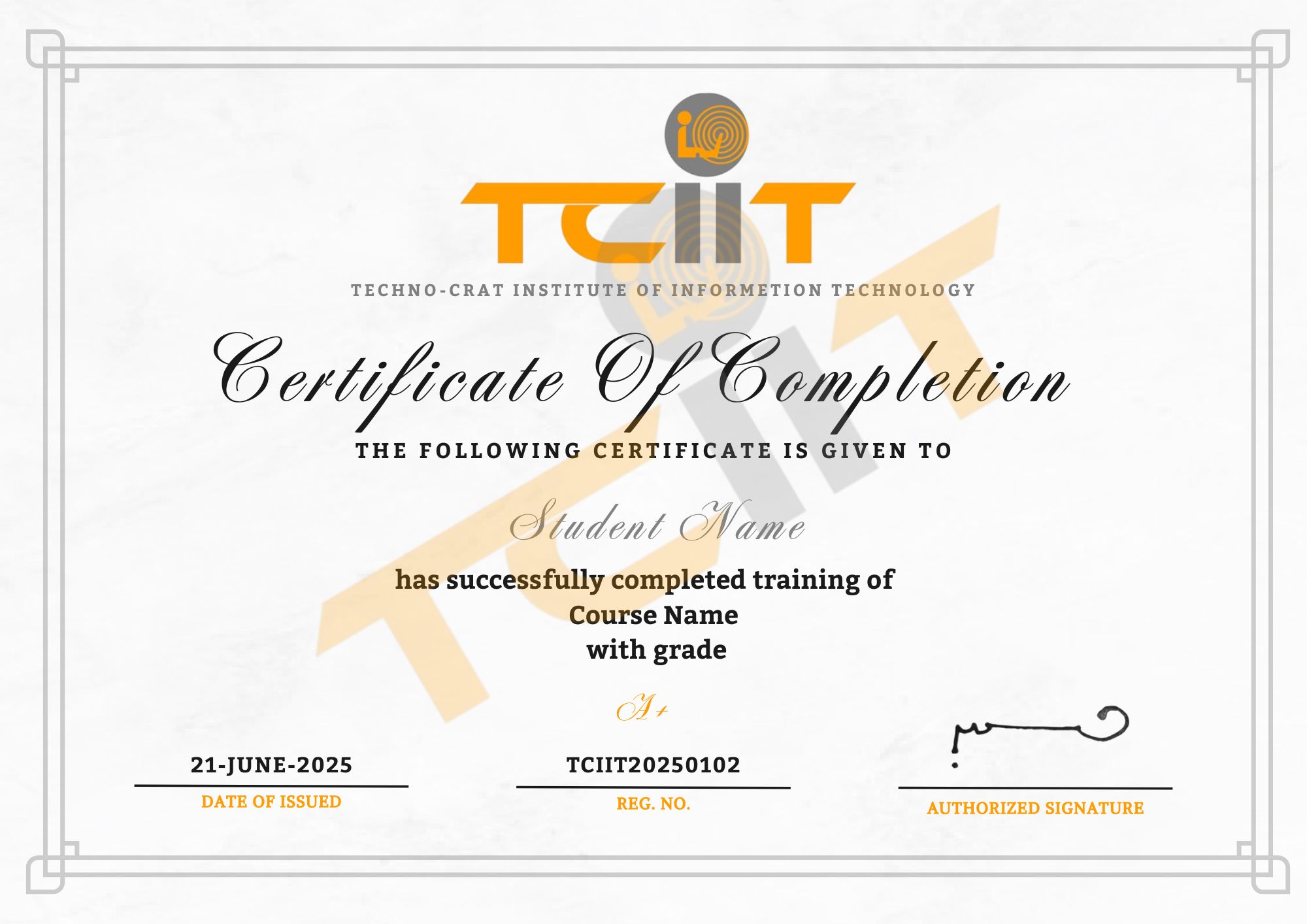
Upon successful completion of the AWS Certified Solutions Architect – Associate Course, learners receive a globally recognized AWS certification through our Learning Management System (LMS). This certification validates your skills in designing reliable, cost-efficient, and scalable AWS solutions, giving you a competitive edge in cloud computing and enterprise IT roles.

thumb
whatsapp